Community Board or Bathroom Wall? What Your Dog Is Actually Reading on That Fire Hydrant
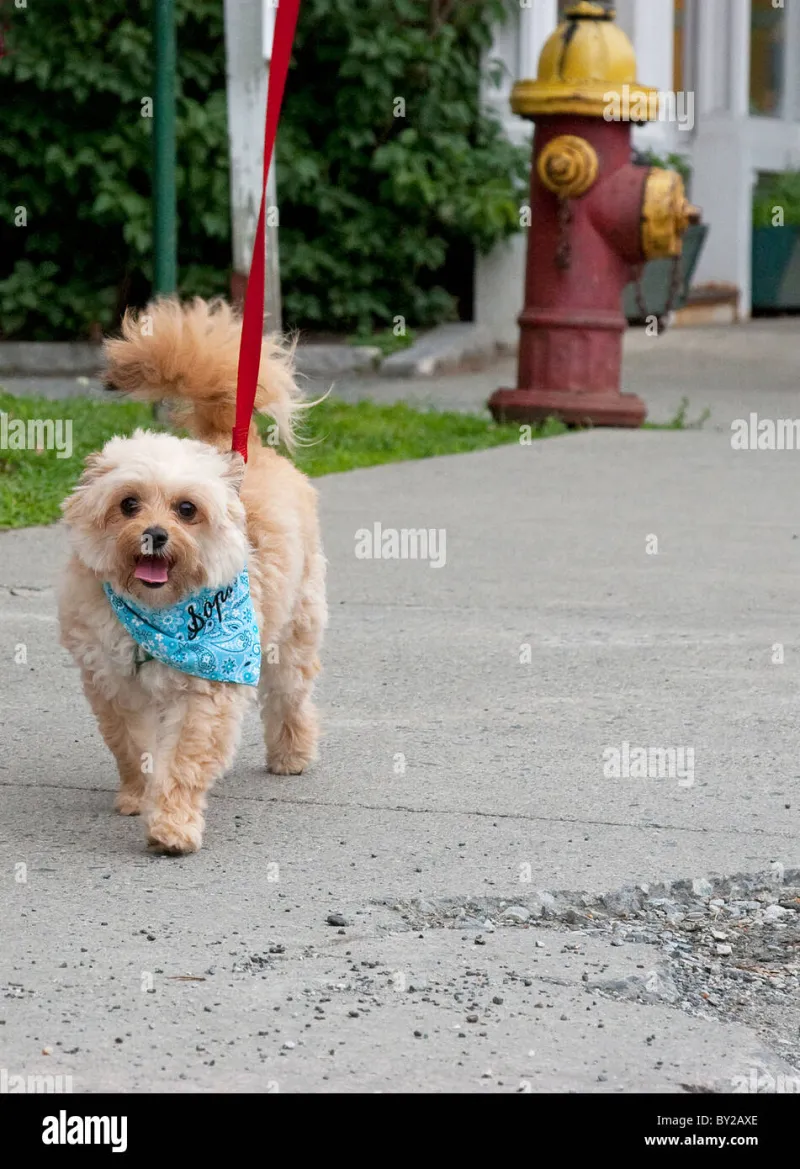
Photo: dog sniffing fire hydrant on sidewalk leash walk, via c8.alamy.com
Your dog has not read the neighborhood Facebook group. Your dog has not seen the Nextdoor post about the suspicious van. And yet your dog knows more about your block than any human who lives on it.
That's because every fire hydrant, mailbox post, and one specific bush on Elm Street is a post in a sprawling, slow-motion social network — one that runs entirely on pee, patience, and your willingness to stand on a sidewalk in February while a beagle reads the equivalent of forty unread emails.
We spoke with certified trainer Dana Whitfield of Columbus, Ohio, and animal behaviorist Dr. Marcus Okafor to understand why your dog's walk has a runtime that would make a Marvel movie blush — and what you can legally, ethically, and guilt-free do about it.
The Sniff Is the Scroll
"People think of walks as exercise," Whitfield says. "Dogs think of them as reading the morning paper, checking voicemail, and catching up on group chats — all at once."
Here's the science, minus the jargon: dogs have somewhere north of 200 million scent receptors (humans top out around a measly 6 million), and a significant chunk of their brain is devoted to processing smell. When your dog lingers at the corner hydrant, they're not dawdling. They're pulling a full dossier: who passed by, when, what they ate, their stress levels, their relationship status, and possibly whether they've recently met a raccoon.
"It's called scent-marking, but really it's scent-reading," Dr. Okafor explains. "The urine left by other dogs carries chemical information. Your dog is essentially leaving a reply and reading the thread at the same time."
That one specific bush? It's not a bush. It's the neighborhood's community bulletin board, and your dog is pinning a flyer.
The Sniff Tax Bracket
Not all sniffing is created equal. Based on our highly unscientific field observations (and Whitfield's actual professional guidance), here's where your dog's stops rank:
Bracket 1 — The Drive-By Glance (1–3 seconds). A quick nose boop and move along. This is skimming the headlines. No reply needed.
Bracket 2 — The Casual Read (5–15 seconds). A proper sniff with mild interest. Your dog has read the article but isn't commenting.
Bracket 3 — The Deep Dive (20–45 seconds). Nose working overtime, possibly a paw raised in contemplation. Something juicy is in this thread. A new dog in the neighborhood, perhaps.
Bracket 4 — The Full Editorial (45+ seconds). Multiple sniffs, a careful sniff-response composed with great deliberation, and a meaningful look at you, as if to say, "You will not believe what the poodle upstairs posted."
Bracket 5 — The Sit-In (indefinite). Your dog has moved in. They live at this hydrant now. This is typically reserved for posts by intact males, dogs in heat, or anyone who recently ate chicken.
The Sociology of the Hydrant
Dr. Okafor notes that marking behavior isn't just gossip — it's also status management. "Higher-ranking or confident dogs often mark over existing marks. It's the canine equivalent of replying-all with 'per my last email.'"
This means your dog's walk isn't just a walk. It's a diplomacy mission. Every overmark is a statement, every sniff a diplomatic briefing. Your neighborhood has politics, and your dog has opinions — mostly delivered via bladder.
Whitfield adds that this is why leash-pulling toward hydrants is so common. "From the dog's perspective, they're not being difficult. They've received a notification and they'd like to open it, please."
How to Shorten the Walk Without Breaking the Contract
Good news for the chronically late: you don't have to cancel the subscription. You just have to manage the screen time.
1. Institute a "sniff budget." Designate the first five to ten minutes of the walk as free-scroll time. Let your dog read everything. After that, transitions matter more than total time.
2. Use a release cue. Whitfield recommends a consistent word — "let's go," "move along," "read it later" — paired with forward motion and an occasional treat. "You're not punishing the sniffing. You're teaching that reading time ends, but it always comes back."
3. Add a "sniffari" day. Once or twice a week, ditch the route entirely and let your dog wander at their own pace. Dr. Okafor calls this "mental enrichment," but we're calling it what it is: a full inbox-clearing session. Dogs on sniff walks come home measurably more tired than dogs on distance walks. Yes, really.
4. Never yank mid-read. Interrupting a Bracket 4 sniff with a leash pop is like hanging up on your best friend mid-sentence. It builds frustration, and frustration builds pulling. Finish the thought, then move.
5. Accept the bush. Some posts are non-negotiable. Every neighborhood has one bush, one hydrant, one storm drain that must be checked daily. Fighting it is a losing battle. Resign yourself. Bring a podcast.
The Bottom Line
Your dog's forty-five-minute walk on a twelve-minute route isn't a failure of leash training. It's a dog maintaining an active presence on the neighborhood's oldest social network — one with no ads, no algorithms, and a strict no-drama policy (except for that thing with the poodle).
So the next time you're standing in the cold watching your dog compose a thoughtful reply at the base of a fire hydrant, take heart: you're not walking a slow dog. You're walking a well-informed citizen.
And honestly? Given the state of most group chats, your dog's feed might be the healthier one.