I Misread My Dog at the Park and Lived to Research It: A Field Guide to Actually Speaking Dog
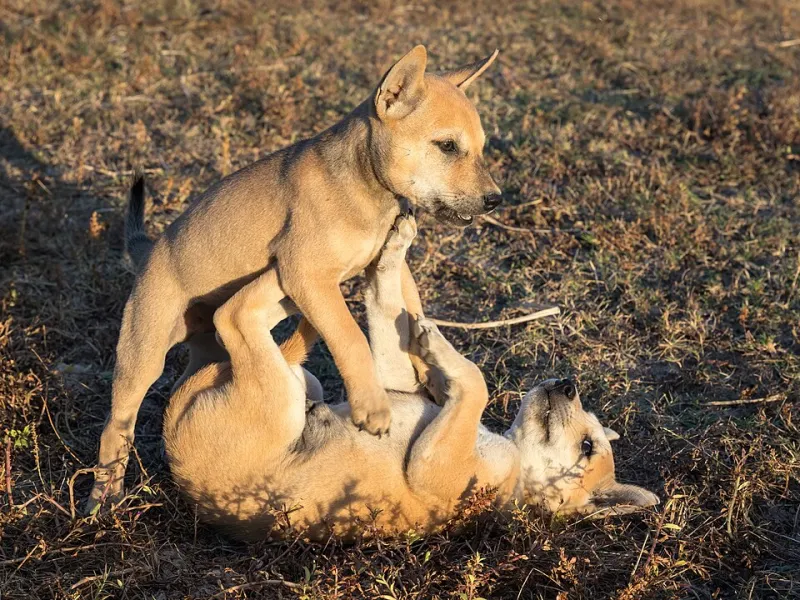
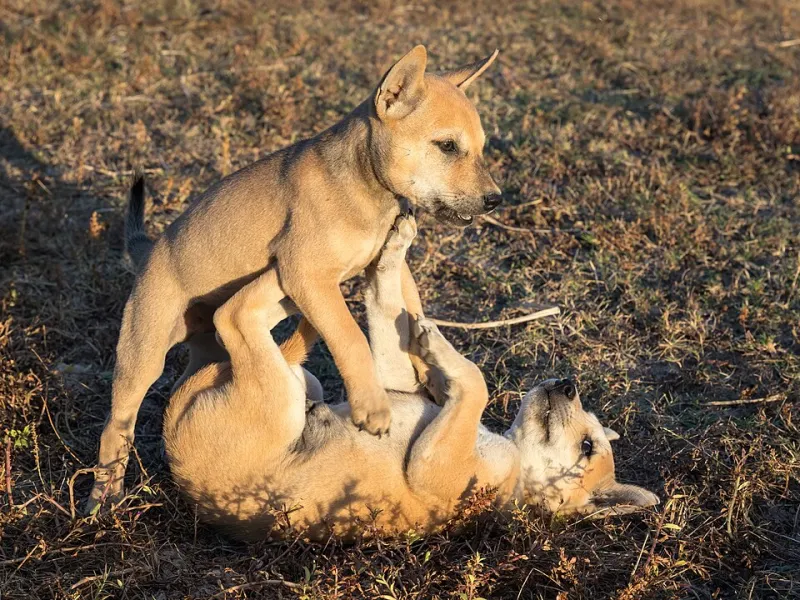
Photo: Basile Morin, CC BY-SA 4.0, via Wikimedia Commons
Let me set the scene. It's a Saturday morning at the dog park in my Ohio suburb — the good one, with the double-gated entry and the water fountain that only works if you kick it. My lab, Waffles, is doing his usual routine: zoomies, greetings, more zoomies. Then a husky mix arrives, and the two of them start what I confidently described to another owner as "playing so hard!"
A trainer who happened to be at the park with a client watched for about thirty seconds and then said, gently, "That's not play. That's one dog asking for a break and not getting one."
I was mortified. I'd had Waffles for four years. I thought I knew him. Turns out I'd been reading the book upside down the whole time.
So I did what any embarrassed dog parent does: I fell down a research rabbit hole, interviewed two certified trainers, and came out the other side fluent-ish in Dog. Here's what I wish someone had handed me at the gate.
The Big Lie: 'Wagging Tail Means Happy'
Every American kid grows up learning that a wagging tail equals a friendly dog, and trainers will tell you it's the most dangerous myth in circulation. "A tail wag just means arousal — emotional arousal of any kind," one trainer told me. "Fear wags. Uncertainty wags. You have to read the whole dog, not the tail."
What does the whole dog look like? Look at speed and height. Loose, wide, swooshy wags that involve the hips? Usually genuine. High, stiff, fast, blade-like wags? That's tension. A tail tucked or clamped low? That's worry, even while it moves.
Stress Signals: The Polite 'No Thank You'
Dogs are, by and large, extremely polite. Before they ever growl or snap, they run through a whole catalogue of discreet signals that most of us blow right past:
- Lip licking and yawning (when not tired or hungry) — a canine "let's all calm down here"
- Turning the head or whole body away — literally asking for space
- The "whale eye" — whites of the eyes showing as they track something sideways
- Scratching, sniffing the ground, or shaking off mid-interaction — displacement behavior, the dog equivalent of checking your phone to avoid a conversation
- A stiff, frozen body — the biggest red flag of all. Freeze is often the last stop before a reaction.
At the park that day, Waffles had done at least four of these. The husky wasn't malicious — he was young and pushy, which is its own kind of problem — but Waffles had been telegraphing "I need a breather" in every language except the one I was watching.
The Play Bow: Nature's Clearest Sentence
Not everything at the park is tense, and there's one signal that's genuinely wonderful: the play bow. Front end down, butt in the air, elbows on the ground. It's the clearest sentence in the canine language — "everything I'm about to do is a game."
Good play has a rhythm to it. Trainers describe it like a conversation: role reversals (the big dog lets the little dog "win"), frequent pauses, and — this is the key part — the chase re-initiates from both sides. If one dog is always chasing and the other is always fleeing, that's not a conversation. That's a monologue.
The Consent Test Every Owner Should Know
This one changed how I visit the park entirely. Here's the technique trainers recommend: when two dogs are wrestling, the owner of the more persistent dog should step in, calmly hold their dog's collar or cue them away for a few seconds, and watch what happens.
- If the other dog comes back for more, reinitiating contact or offering another play bow? Great. That dog is a willing participant.
- If the other dog walks away, shakes off, or creates distance and doesn't return? They were tolerating, not playing.
The test takes ten seconds and prevents the slow-boil situations where an overwhelmed dog finally runs out of patience. "Most park scuffles aren't random," one trainer told me. "They're the end of a long conversation nobody was listening to."
How to Be Your Dog's Translator, Not Their Bouncer
Here's the mindset shift that stuck with me: your job at the park isn't to referee every interaction — it's to advocate. If your dog is asking for space, help them get it before they have to shout. That might mean calling them over for a water break, or simply using your body to block an overzealous greeter. And if another owner gets huffy because you interrupted their dog's "fun"? That's a them problem. You're not being rude. You're being bilingual.
Waffles and I still go to the park. He still does his zoomies. But now I watch the pauses, the shakes, the sideways glances — and I step in a whole lot sooner. He's a better park citizen for it. And honestly? So am I.